
I have worked in a lot of different environments over the years, and one thing has always stood out to me. In any successful operation, somebody has to see the whole picture.
Think about a busy restaurant kitchen. There may be a dozen meals being prepared at the same time, each made up of different components that take different amounts of time. Something needs to go on the fire now. Something else needs to wait another five minutes. One dish is almost ready while another has barely started.
Yet somehow, when everything works correctly, the entire meal comes together at the right time. That doesn't happen by accident. Someone is thinking ahead.
Someone understands the timing, the sequence and the relationship between all those moving parts. While everyone else may be concentrating on the task directly in front of them, someone is thinking about what needs to happen next.
I have seen this same thing in almost every type of production I have been involved with. And over the years, I have come to believe that this ability isn't something reserved for managers, business owners or people with a certain title.
Everyone can develop it.
Don't Just Learn the Task
Most of us start a job by learning what we're supposed to do. That's obviously necessary. But there is a difference between learning how to perform a task and understanding the mission that task belongs to.
You can learn how to operate a machine without understanding the production line. You can learn how to stock a shelf without understanding what customers are looking for. You can learn how to prepare one part of a meal without understanding what has to happen for the entire table to be served together.
At some point, if you want to become better at what you do, you have to start looking beyond the boundaries of your own task. What happens before your part? What happens after it? Who depends on you? Who are you depending on? What causes everything to slow down? What problems keep happening? What could be done differently?
And perhaps the most important question:
What am I not seeing yet?
That is where growth begins.
I Have Always Wanted to Understand More
This has always been part of my nature. When I became interested in something, I wanted to understand it. I have spent my own money on schools and training simply because I wanted to become better at what I was doing.
I have usually aspired to become capable of taking the lead—not because I needed a title, but because I wanted to understand enough to know what needed to happen next.
At one point in my life, I earned a pilot's license. I didn't become an airline pilot. That wasn't where my life went. But the knowledge wasn't wasted.
As a mechanic, understanding aviation from the pilot's perspective gave me another level of understanding. I could communicate differently. I could better understand what a pilot was describing because I had experienced that environment myself.
That taught me something I have carried throughout my life:
Knowledge is rarely wasted when it helps you see more of the mission.
Are You Working, or Are You Participating?
This is where I believe we have a problem today. Too many people have come to believe that doing exactly what they were told to do is the complete definition of doing a good job.
Show up. Do the assigned tasks. Wait for the next instruction. Punch the clock. Go home. Technically, you may have done your job. But did you participate?
Did you notice anything? Did you learn something you didn't know yesterday? Did you see a problem developing? Did you recognize something that could be improved? Did you have an idea? Did you say it?
There is a huge difference between being physically present at work and being mentally engaged in what is happening around you. And this isn't about working yourself to death for someone else's business. It's about what you are building in yourself.
This Doesn't Have to Be Your Dream Job
Maybe the job you have today isn't your career. Maybe you're working there while you go to school. Maybe you're saving money. Maybe you're trying to figure out what comes next. That's fine.
But if you're going to spend eight hours of your life somewhere today, why wouldn't you learn everything you can while you're there? The company may benefit from your growth, but the growth belongs to you.
Learn how the business works. Learn how customers think. Learn how to solve problems. Learn how to communicate. Learn how to organize your time. Learn how to recognize what needs to happen next. Learn how to work with difficult people. Learn what good leadership looks like—and pay attention when you see bad leadership too.
You take those lessons with you when you leave. Every workplace can become a classroom if you decide to treat it that way.
Ask the Dumb Question
Some of the most important conversations I have ever been part of started with a simple question.
"Why do we do it this way?" "What if we tried this?" "Why does this keep happening?" "Would it work better if we did this first?"
Maybe your idea won't work. Maybe your question exposes something you simply didn't understand. So what? You learned something. And sometimes the so-called dumb question exposes something that everyone else has stopped questioning.
You don't have to walk into every conversation carrying the solution. You just have to be willing to think. A bad idea can lead to a better idea. A question can expose a problem. A different perspective can cause someone else to see something they missed.
You don't have to be right to contribute.
You have to be willing to participate.
Learn to See What Comes Next
Think again about that chef running a busy kitchen. The ability to keep everything moving didn't appear overnight. First, the chef learned one task. Then another.
He learned how long things actually take—not how long they're supposed to take. He learned which things can wait and which cannot. He made mistakes. He watched other people. He learned the relationships between all the moving parts.
Eventually, he stopped simply reacting to what was happening. He began anticipating what was going to happen. That is one of the most valuable abilities you can develop in almost any profession.
The person who always seems to know what to do next probably spent years learning to understand what happens next.
You can develop that ability too. Start by paying attention.
Whatever You're Doing, Participate
You may not be where you ultimately want to be. You may not have the position you want. You may not be working for the company you plan to stay with. You may not even know what your ultimate mission is yet. But today, you're part of something.
Participate in it.
Pay attention. Ask questions. Offer your ideas. Learn the process around your task. Understand who depends on you and who you depend on. Watch what succeeds. Study what fails. Think about what comes next instead of always waiting for someone to tell you.
Don't do it only for the company you're working for. Do it for yourself. Because every skill you develop, every process you learn, every question you ask and every problem you teach yourself to solve becomes part of what you bring with you to the next mission.
You don't have to wait until someone gives you a leadership position to start developing the qualities of a leader. You don't have to wait for your dream job to start becoming exceptional at what you do. And you don't need permission to start thinking.
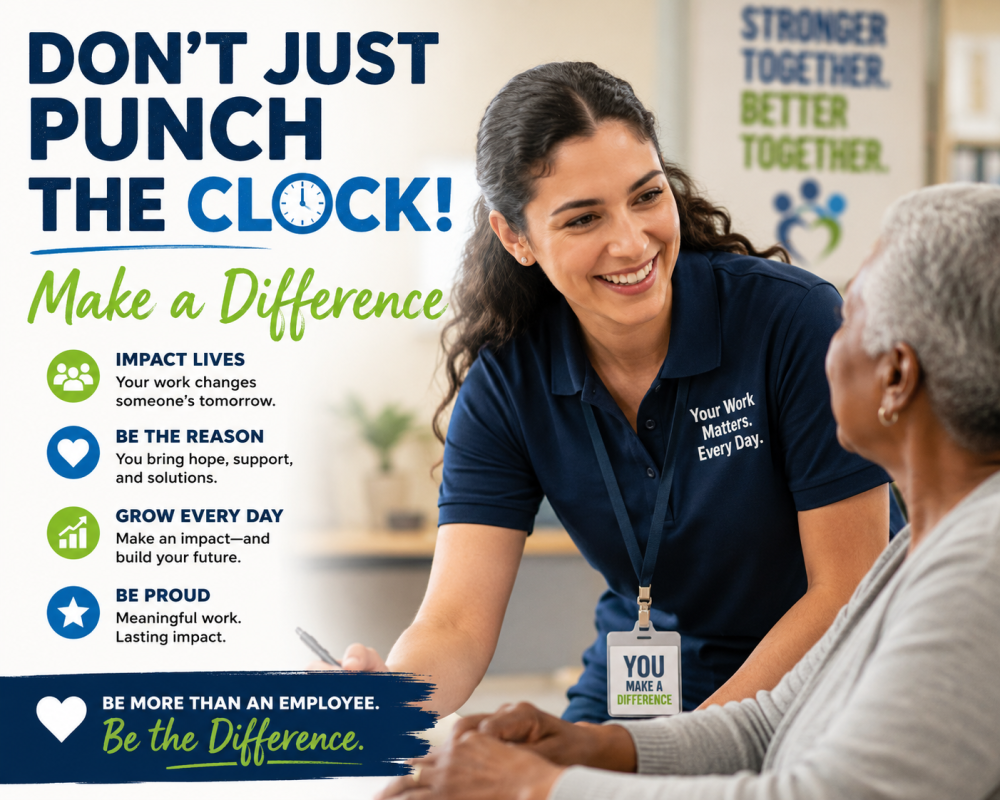
Don't just punch the clock.
Learn to see the mission.